Support Groups
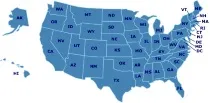
Homeschoolers have created networks of support to provide a way to make friends, get ideas and information, and to offer positive socialization opportunties to their children. You can join in! There are many groups to choose from, many with specific affiliations, like Christian groups or unschoolers’ groups. Some are eclectic, inclusive, and open to anyone. Whatever your interest, you are sure to find other like-minded parents. And if you don’t find what you are looking for, we’ve put together tips for starting your own group.
What's Popular
Secular Homeschooling Forum at vegsource.com
A message board at vegsource.com for those who homeschool for non-religious reasons.
Storage Strategies for Homeschool Families
Stuff! For homeschool families, it's everywhere. Books and papers. Art supplies. Math manipulatives. Science projects. Record-keeping demands its own set of materials: attendance forms, correspondence, testing, student portfolios, and piles and piles of paper! Find out strategies for storing kid's stuff, using color coding, organizing your desk, and more.
ThinkQuest
ThinkQuest is an international student competition, sponsored by the Oracle Education Foundation. Students work in teams to build creative and educational websites that explore globally relevant subjects. Diverse teams made up of members from more than one school, community, or country are encouraged. Competitions are open to students and teachers from anywhere in the world. Teams must have 3 to 6 students who are between the ages of 9 and 19, and one adult Coach who is a school employee. Homeschooled students may participate so long as they are part of a team that is associated with an accredited public, private, or parochial school (i.e., Primary Coach is an employee of an accredited public, private or parochial school and other team members are affiliated with an accredited school). Homeschooled students might consider forming a team with students from another country. Being a member of a multi-country team presents a great opportunity for all students to learn about other cultures and to learn valuable collaboration skills. The completed websites are published in the ThinkQuest Library, a rich learning resource used by millions.
Life of Fred
This set of books is unlike any other textbooks. Each text is written in the style of a novel with a humorous story line. Each section tells part of the life of Fred Gauss and how, in the course of his life, he encounters the need for the math and then learns the methods. Tons of solved examples. Each hardcover textbook contains ALL of the material – more than most instructors cover in traditional classroom settings. Includes tons of proofs. Written by Dr. Stanley Schmidt with the intent to make math come alive with lots of humour, clear explanations, and silly illustrations that stick in the mind. The student will learn to think mathematically. Completion of this series prepares student for third year college math.
Homeschooling and the Myth of Socialization
A homeschooling father discusses how homeschooling reinforces positive socialization and some of the dangers of public school socialization.
A Net in Time Schooling
A homeschool mom and her only son share their homeschooling adventure.
Preschool Practice: Shapes and Colors
Learning shapes and colors may well be a young child’s first educational endeavor. Although recognizing objects as red or blue, round or square might seem like child’s play, it’s actually integral to a young child’s cognitive development, and sets the stage for math concepts from sorting and patterning to geometry, and beyond! What can you as a parent do to help your young learner master these academic milestones? You may not have to look beyond the backdrop of your life for the perfect learning tools. Try a few of these fun activities to help your child master colors and shapes.
Can a Christian Be an Unschooler?
Unschooling is an educational approach, an attitude towards learning. It refers to the ways in which we use books, materials, and experiences to learn and grow. The type of underlying structure you have inside yourself, your goals, value system, discipline, whether you watch TV or call parents by their first names, whether you use a patriarchal, democratic, or any other type of family structure, are not unschooling issues; they are parenting issues. Whether unschoolers or not, every parent must deal with these issues. Homeschoolers can agree on matters of how children learn and can even share a similar homeschooling style without agreeing on all of those personal issues; Christians can be unschoolers.
Christian Montessori Homeschoolers
This group is for those who use the Montessori method for part or all of their homeschooling efforts for all age groups. This is primarily a Christian group, though others are welcome to join.
A Brief History of Homeschooling
Patrick Farenga looks at the history of homeschooling from before the founding of our country to present day. He includes discussion of the work of some important people in the homeschooling revolution.